How To Position Your Offer For Cold Email
What you choose to offer, and the way you position it, plays a critical role in whether a campaign can take cold traffic and turn it into paying clients. Deliverability, copywriting, lead lists, and calls to action all matter. But your cold email offer is one of the highest points of leverage in the whole campaign, and getting it right drastically increases your chances of positive replies and booked calls.
This post breaks down how to position your offer for cold email: how to tell whether your offer has a positioning problem, and the three ways to fix it if it does.
- Every offer sits somewhere between commodity and new and scarce. The goal is to push yours toward new and scarce.
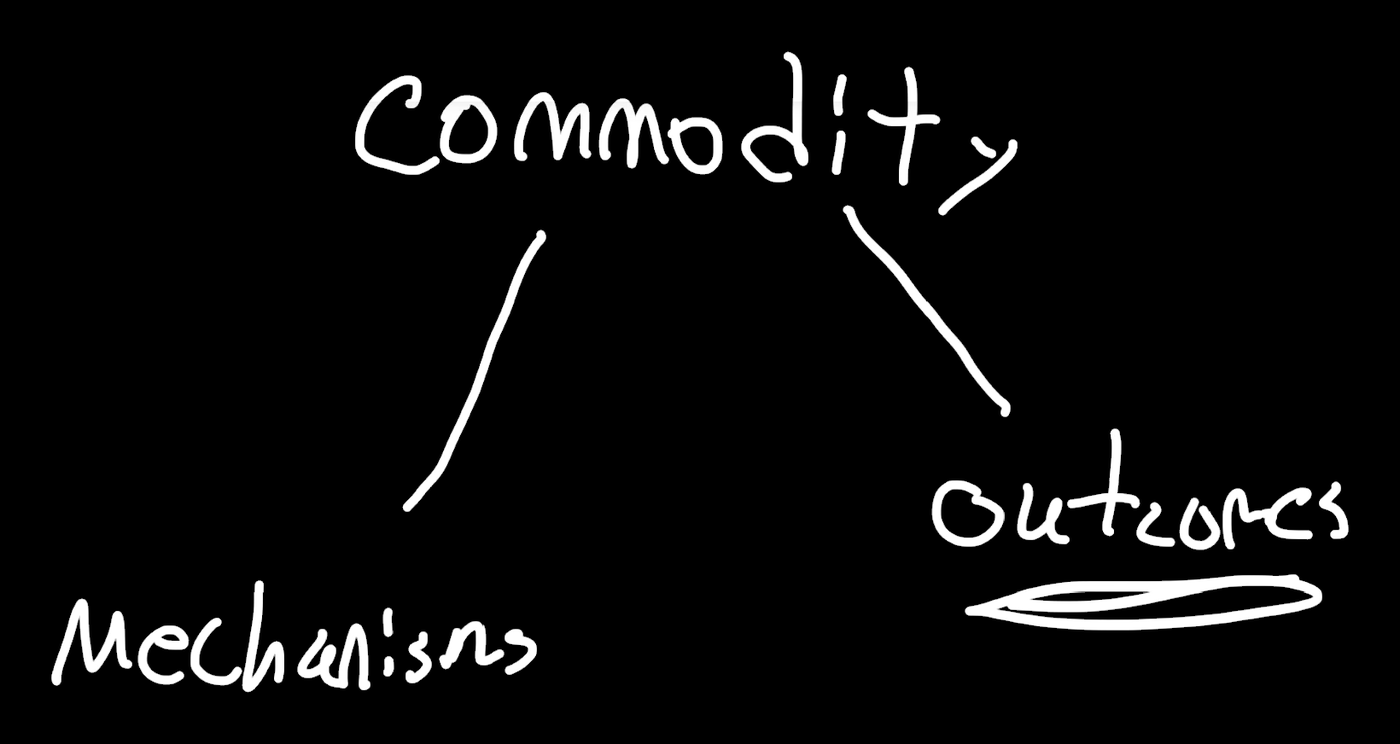
- If you sell a commodity, lead with either a hyper specific outcome or a personalized breakdown of your mechanism.
- Or map your customer's journey and pitch one of the small wins before the big result.
- Whichever route you take, test several angles and keep iterating until one converts.
Cold email is a pattern interrupt, and so is your offer
Cold email all comes down to pattern interruption. Your prospect gets bombarded with the same messages every single day, and your job is to stand out from that crowd.
Most people only apply that idea to subject lines and opening lines. Those matter. But the offer is no different. If you reach out and offer exactly what everyone else is offering, you blend in, and blending in is how a cold email gets ignored.
Is your offer a commodity or new and scarce?
Every offer lies somewhere on a line with two ends.
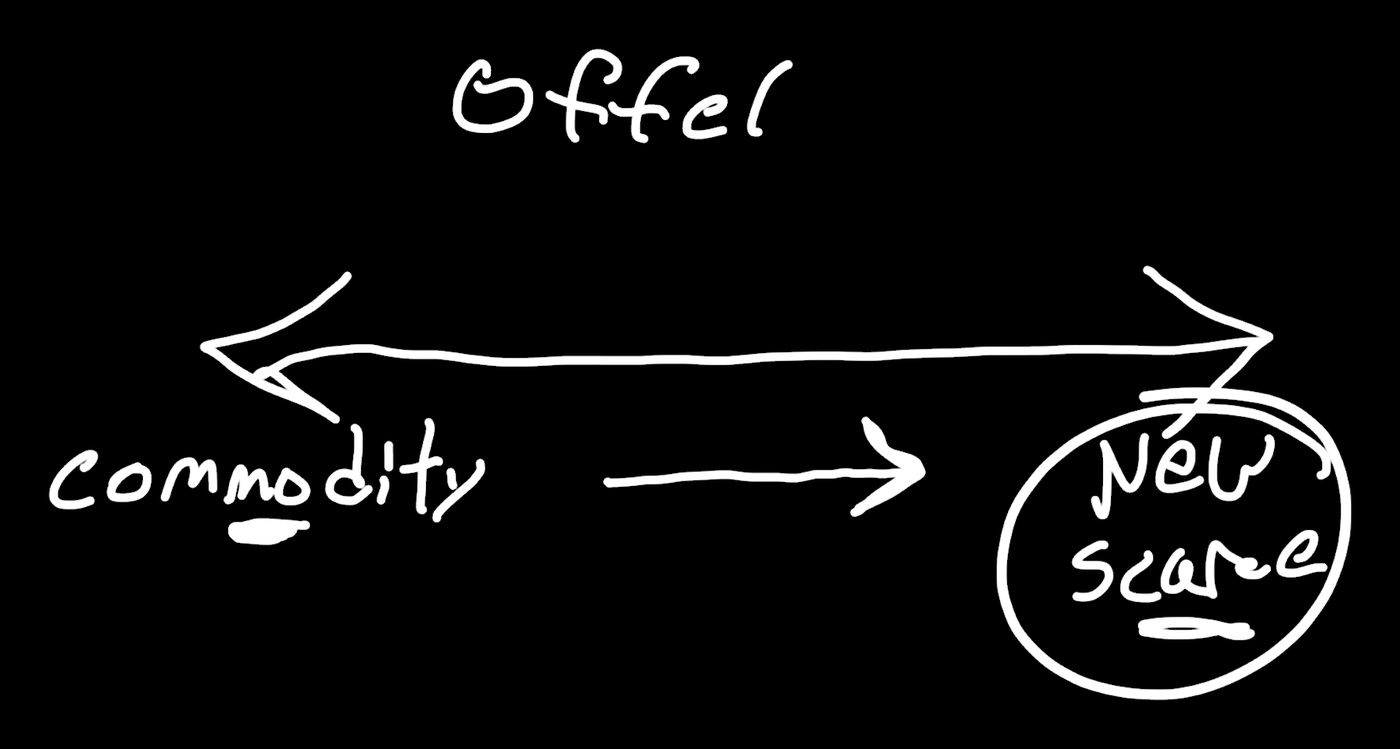
Commodity offers
These are services people already know exist. SEO agencies, Facebook ad agencies, cybersecurity, even staffing and recruitment. There is nothing new about them and nothing scarce. The prospect has seen the pitch before, probably this week.
New and scarce offers
These are offers that are not widely known and are not being sent much over cold email. Two examples:
- Custom paved parking lots sold to brick and mortar B2B companies. Almost nobody is offering that over cold email right now, so it stands out on arrival.
- Access to historical HR data. I worked with someone whose customers used HR software that had been acquired and was going end of life, which meant losing their data. They built software to keep access to that historical data. Very niche, very scarce.
If your offer already looks like those, you are in good shape and the rest of this post is optional. If you sell something well known, like SEO, keep reading. You have three ways to move it toward the scarce end.
If your offer is a commodity: outcomes or mechanisms
With a commoditized offer you can lead with one of two things. The outcome you deliver, or the mechanism you use to deliver it.
Option 1: Lead with the outcome
Outcome offers sound like "we will get you 30 booked calls in under 60 days" or "we will get your company seven new hires within the first quarter." You are selling the destination, not the plane.
What I have noticed with cold traffic is that outcomes have to be hyper specific. Vague does not work. "We will add $55,000 to your MRR in 45 days or you don't pay" is the kind of offer that has a chance, as long as you can back it up with social proof, case studies, and testimonials. The more specific, the better.
The advantage of an outcome offer is intrigue. When someone reads a specific result with a case study attached, they want to know what is behind it, and that curiosity works in favor of your reply rate.
That intrigue is also the risk. The prospect starts wondering what you actually do, and if the answer turns out to be "SEO services," you can lose them at the reveal. That is where a unique selling proposition comes in.
Add a USP, but do not bait and switch
Whatever genuinely differentiates you from competitors, wrap it into a unique selling proposition so the outcome has something distinctive behind it. If you get clients more leads with cold email and you use a particular AI technique to do it, you can frame the offer around that.
Just be careful. Do not get carried away. If the USP promises something the service is not, you have baited and switched, and people do not like that.
Option 2: Lead with the mechanism
This one is unconventional. Standard sales advice says features versus benefits, always sell the benefit, always sell the destination and not the plane ticket. In cold email you can actually get away with selling the mechanism, because it shows competence, credibility, and trust.
The key is personalization. I break down exactly what my service is, but framed around how we would do it for their company. A format that works well is a short list of three to five bullet points, written by AI for each prospect, laying out specific ways you could help that business.
Here is how that looks if I am selling cold email. I have AI scan the prospect's website and come up with three ideas for how cold email could get them more clients. Say the prospect is a staffing and recruitment agency in North Carolina that focuses on local hiring in Charlotte. The bullets might be:
- Lookalike campaigns built from the successful case studies they already have in Charlotte.
- Campaigns targeting companies that are actively hiring in Charlotte.
- Campaigns targeting Charlotte companies that recently raised funding and are now growing.
Each of those is a real signal, personalized to their business. If hiring is the signal you want to build on, I walked through finding that data in my TheirStack review. Done this way, a mechanism offer reads as more human. It shows you took the time to look at their website, and I have seen it convert very well in my own campaigns.
Option 3: Map the customer journey and pitch a small win
There is also the more general approach: lead magnets, special offers, discounts, soft calls to action, or offering a Loom video breaking down exactly what you would do for them. All of these have worked for people.
The most effective way to find the right one is to map out your customer's journey from their problem to their big win.
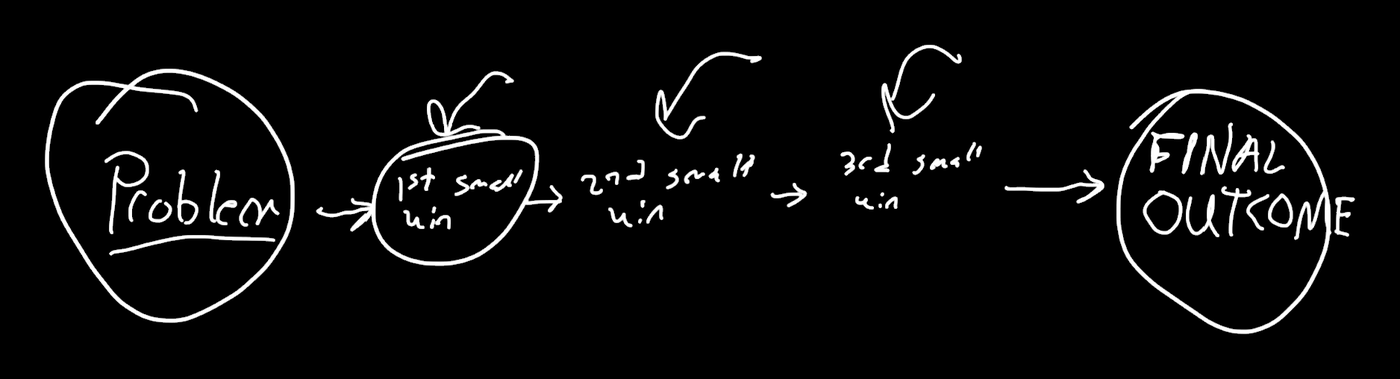
Start with the problem. Then write down the steps they need to take to reach the final outcome, whether that is 30 new clients a month or $50,000 added to MRR. Along the way you will notice a series of small wins. A first small win, a second, a third, and then the ultimate result.
Now, instead of pitching the final outcome, meet them at the first, second, or third small win. Pitch that up front, either discounted or for free. It works a lot like a front end offer in an ecommerce funnel. A small, easy yes that leads naturally to the bigger purchase.
This takes real time and I cannot do it for you in a blog post, because every business, offer, and industry is different. But sitting down to map it out will hand you a list of lead magnet ideas worth testing. It also pairs naturally with a soft call to action, which I covered as one of the five fundamentals of generic cold email campaigns.
Test until you find the angle
None of these is a one shot fix. Test multiple lead magnets. Test different outcomes. Test different mechanisms. Keep iterating on the angle until the results show up, because that iteration is a big part of what makes a cold email offer work.
If your offer is already new and scarce, lean into it. If it is a commodity, you now have three ways to reposition it for cold traffic: a hyper specific outcome, a personalized mechanism, or a small win pulled from your customer's journey.
If you want help mapping your customer journey and finding the small wins that lead to their final outcome, or you just want cold email campaigns run for you to generate more leads and revenue, book a call. I would love to help.
Book a call